
Your MVP Should Embarrass You a Little: The Right Way to Scope Your Product
What Is an MVP?
Imagine you have an idea to build a product. Not just a product, but a solution that you genuinely believe will solve a real problem for thousands of people around the world.
You've thought about the features, the user experience, the dashboard, the payment system, the notifications, the integrations, and everything else that would make the product impressive. You even imagined what the application would look like five years from now. You see the acquisition, the growth and the scale.
Everything looks good and all you see is possibilities of growth. There is just one problem: none of it exists yet.
So, you start building. Maybe hire a CTO or a technical co-founder. You spend days talking about the features with him. Then another couple of days planning the UI, adding features, refining workflows, and making sure everything is connected. Then you remember another feature that would make the experience better. You add it to the development plan. A few days later, another idea comes up.
Before you know it, your original project has become significantly bigger than what you initially set out to build.
Does this sound familiar?
This is where the idea of a Minimum Viable Product (MVP) becomes important.
An MVP is the simplest usable version of a product that delivers its core value to users and allows you to test your assumptions in the real world.
Let's break down the three words.
Minimum: Only the essential features needed to deliver the product's primary value. Not every feature you've imagined, just what is necessary to make the first version useful.
Viable: It must actually work. Users should be able to interact with it and accomplish what they came to do. Minimum does not mean broken, unreliable, or frustrating.
Product: It must be something people can use to solve a problem, not merely a presentation of what you intend to build.
An MVP is not necessarily the final product you want to put in front of the entire market. It is a starting point that helps you understand whether your idea works for the people you intend to serve.
Y Combinator makes a similar argument in its guide on how to plan an MVP: start with a lean product, limit the functionality, and focus on the needs of your initial users. The goal is to get something useful into people's hands and learn from it. That last part is particularly important.
An MVP is not just about building less. It is about learning before you invest more.
The Perfection Trap
One of the biggest reasons many founders struggle to launch is that they want their first version to look like the product they've imagined in its entirety.
They want the beautiful interface, the complete dashboard, the automated notifications, the advanced analytics, the mobile application, the integrations, and every other feature that has crossed their minds.
And honestly, who wouldn't want that?
You've spent time thinking about the product. You've probably discussed it with friends, written down your ideas, and imagined how people will react when they finally get to use it. You want to put your best foot forward.
But there's a difference between wanting to build a great product and believing you must build the entire thing before anyone can use it.
The latter can keep you stuck for months.
Consider a founder building a platform that connects homeowners with service providers. The original idea is straightforward: homeowners should be able to find suitable professionals, request services, and get connected.
But somewhere along the way, the project grows.
Now, the founder wants provider subscriptions, in-app messaging, advanced search filters, customer loyalty points, automated recommendations, multiple payment options, a mobile application, referral bonuses, analytics dashboards, and an elaborate review system.
Some of these features might eventually become important. But are they all necessary to establish that homeowners actually want to use the platform?
Can the founder launch a simpler version that allows homeowners to find providers and submit requests? Can the team initially handle provider verification and some of the coordination manually?
If the answer is yes, why wait until every supporting feature is ready?
The uncomfortable truth is that you can spend six months building the product you think people want, only to discover that the people you built it for wanted something entirely different.
Meanwhile, someone with a simpler version might already be talking to customers, understanding their needs, and improving the product.
You're trying so hard to get everything right before launch that you're delaying the very thing that could tell you what needs to be right.
That's the perfection trap. And the purpose of this blog is to help you avoid it.
Y Combinator's essential startup advice puts emphasis on launching, building something people want, and talking to users. These are not activities to postpone until the product is perfect. They are part of figuring out what the product should become.
You Don't Need All Those Features. Not Yet.
Let's talk about scope creep.
In software development, scope creep happens when the requirements and expectations of a project gradually expand beyond what was initially agreed upon or planned.
It often starts innocently enough.
The client requests an additional feature. A developer identifies another improvement. A stakeholder suggests a new workflow. Someone realizes that a competitor has a feature the product doesn't have.
Each addition seems reasonable on its own. But when you keep accommodating these requests without reconsidering the overall scope, the project becomes bigger, more complicated, and more expensive to deliver.
The same thing happens when founders build their own products.
You start with a clear idea, then gradually expand the requirements until the first version becomes a much larger undertaking.
And sometimes, you're the one introducing most of the additional requirements.
You see a feature in another application and decide yours needs it too. You imagine how useful a particular integration could be. You think about what users might request six months after launch and decide to build it now.
Before long, you're developing for a future that hasn't happened.
Here's something worth remembering: established products didn't necessarily start with everything you see today.
Take Amazon, for example. It began as an online bookstore before expanding into the much broader marketplace we know today. Its initial scope was considerably narrower than its eventual ambition.
The lesson isn't that every product should follow the same path. It's that a product can have a big vision without requiring a massive first release.
You can know exactly where you want to take your product while being deliberate about what you build first.
Your vision can be ambitious. Your first version should be focused.
How to Decide What Makes the First Version
This is where things become practical.
Knowing that you should build less is one thing. Knowing exactly what to leave out is another.
The starting point is not your feature list. It is the problem you're trying to solve.
Before deciding what goes into your MVP, answer these questions:
Who exactly are we building this for?
What problem are we trying to solve for them?
What is the primary thing they should be able to accomplish using the product?
What is the smallest set of functionality required to make that happen?
Let's use an example.
Suppose you're building an online appointment booking platform for salons.
Your long-term vision might include customer accounts, salon profiles, staff management, appointment scheduling, automated reminders, online payments, customer reviews, loyalty rewards, marketing tools, sales reports, and mobile applications.
But what is the primary promise of the product? Simple: Helping customers find a salon and book an appointment without having to call or visit physically.
That gives you a much clearer starting point.
You could organize your proposed features into three groups:
1. Core features: These are essential to delivering the primary value of the product.
For the booking platform, this could include:
A list of participating salons.
Available services and appointment slots.
A way for customers to select a service and book.
A system for salons to receive and manage bookings.
Without these, the central experience cannot happen.
2. Supporting features: These improve the experience but might not be necessary for the first release.
For example:
Automated appointment reminders.
Customer profiles and booking history.
Multiple payment options.
Advanced search filters.
Depending on the business model, some of these might become essential. The point is to evaluate them against the product's actual requirements rather than automatically including everything.
3. Nice-to-have features: These can make the product more sophisticated but do not necessarily help validate the central idea.
For example:
Loyalty and rewards programs.
Referral bonuses.
Advanced analytics.
Personalized recommendations.
Extensive reporting tools.
They can wait.
A useful question to ask about every proposed feature is: If we remove this feature, can the user still accomplish the primary thing they came here to do?
If the answer is yes, it might not belong in version one.
If removing it breaks the core experience, it deserves a place in the initial scope.
This is not about blindly reducing the number of features. It is about understanding the role each feature plays in delivering value.
Atlassian's guide to building a Minimum Viable Product also recommends identifying the customer problem, defining the assumptions to test, and prioritizing the functionality needed to deliver the core experience.
The important thing is to make these decisions deliberately.
Don't ask how many features you can fit into the first release. Ask which features give users a genuine reason to use the product.
Have a Product Idea? Let's Figure Out Your MVP.
Turning an idea into a working product starts with knowing what to build, what to leave out, and how to get the first version right. Let's help you define the scope and build a product around what your users actually need.
Talk to usYour First Users Are Part of the Development Process
You've defined the problem, narrowed the scope, built the essential features, and finally launched. Now what?
This is where many founders make another mistake. They treat the first launch as the finish line. It isn't.
Getting your first users to interact with the product is the beginning of another important stage: learning from their experience. Remember, the MVP was built around assumptions.
You assumed people had a particular problem. You assumed your proposed solution would help. You assumed users would understand the interface and complete the intended workflow.
Now you have an opportunity to find out how accurate those assumptions were.
Pay attention to what happens when people use the product.
Are users completing the main task successfully?
Where do they get confused?
Which parts of the experience cause frustration?
Are there features they keep requesting?
Are there features you spent weeks building that nobody uses?
Do users return after their first interaction?
These observations can tell you things that hours of internal planning might not reveal.
For instance, you might discover that users are perfectly comfortable booking appointments but struggle to find available salons in their area.
That tells you something about where the next improvement should go.
Or perhaps users keep asking for a feature you considered unnecessary during the initial planning stage. Their repeated requests might indicate that it deserves attention.
This is why you should not treat every suggestion as an instruction to immediately add another feature. Look for patterns, understand the underlying problem, and decide what deserves attention.
Also, remember that what people say and what they actually do can be different.
A user might tell you they love a particular feature but never use it. Another might barely comment on the product but return every week because it solves a problem they genuinely have.
Pay attention to both feedback and behavior.
The Y Combinator Startup Library offers extensive guidance on talking to users and building products around real customer needs. This is an important part of the process, not an activity reserved for established businesses.
Your first users are not simply people testing your application. They are helping you understand what the product needs to become.
An MVP Is Not an Excuse to Ship Rubbish
Now, let's establish something important. When people hear that they should build less and launch sooner, some take it to mean that quality doesn't matter.
That's not what we're saying.
There is a difference between a product with limited functionality and a product that doesn't work properly.
Your MVP might not have advanced analytics, multiple integrations, or a sophisticated recommendation engine. But the features it does have should work.
If a customer tries to book an appointment, the booking should go through correctly. If someone makes a payment, the transaction should be handled securely. If a user submits important information, that information should not disappear.
You cannot use the MVP concept to justify avoidable security problems, unreliable functionality, or a frustrating core experience. The product must be good enough to deliver the value you promised.
This is particularly important when dealing with sensitive information, financial transactions, personal records, and business operations.
You can reduce scope without reducing the standard of execution.
You can postpone advanced functionality without neglecting the essentials.
You can launch with a simple interface without making it difficult to use.
Build less, but build what remains properly.
Your Idea Deserves More Than a Plan.
You have identified a problem worth solving. Now, let's turn that idea into a functional product. Rexta Technologies can help you move from concept to development with the right features, scope, and technical direction.
Speak to our teamBuild, Launch, Learn, Improve. Repeat.
Your first version will probably not contain everything you imagined. It might have a simpler interface, fewer features, and workflows that you eventually intend to improve. And that's perfectly fine.
The important thing is that it solves a real problem, gives your initial users something useful, and creates an opportunity for you to learn.
Once you start getting feedback and observing how people use the product, you can make more informed decisions about what comes next.
Perhaps you need to improve an existing feature. Perhaps users need a completely different workflow. Perhaps a feature you thought was essential turns out to be unnecessary.
You might even discover that your original idea needs to change. That is part of product development.
Your job isn't to defend every assumption you made during the planning stage. It's to build something people find useful and keep improving it as you understand their needs better.
So, before adding another feature to your development roadmap, take a step back.
Ask yourself if it is genuinely necessary for the first release. Ask what you're trying to validate. Ask if there's a simpler way to deliver the same value.
And when you've built something that works, let people use it.
Your MVP should embarrass you a little. Not because you've done a poor job, but because it reminds you that the product is still a work in progress.
You don't need to build the entire vision before you start building something people can use.
Start with the problem. Build what solves it. Get it into the hands of real users. Then let what you learn guide what comes next.
That's how you move from an idea to a product that has a real chance of becoming something bigger.
Frequently Asked Questions
What is a Minimum Viable Product (MVP)?
A Minimum Viable Product is the simplest usable version of a product that delivers its core value to users. It allows founders to test their ideas, gather feedback, and understand whether their proposed solution addresses a real problem before investing in a much larger product.
Why should startups build an MVP before a full product?
Building an MVP helps startups test assumptions before committing significant time and money to development. It gives founders an opportunity to understand customer needs, identify weaknesses in their ideas, and make product decisions based on actual user experiences.
How do I decide which features to include in my MVP?
Start by identifying the primary problem your product is designed to solve. Then determine the features users absolutely need to experience that solution. Anything that doesn't contribute directly to delivering the core value can be considered for a later release.
How long should it take to build an MVP?
There is no universal timeline. It depends on the product's complexity, the number of essential workflows, technical requirements, and the resources available. A well-scoped MVP should avoid unnecessary development, but the priority should be delivering a usable product rather than meeting an arbitrary deadline.
How much does it cost to develop an MVP?
MVP development costs depend on the product's functionality, design requirements, integrations, infrastructure, security requirements, and development approach. The best way to estimate the cost is to define the initial scope and technical requirements before development begins.
Is an MVP supposed to be fully functional?
An MVP should be fully functional within its deliberately limited scope. It doesn't need every feature planned for the eventual product, but the core functionality must work reliably enough for users to accomplish the task the product promises.
What should I do after launching my MVP?
Start gathering feedback and observing how your initial users interact with the product. Identify usability problems, understand which features deliver value, measure relevant engagement, and use what you learn to prioritize improvements. The next development phase should be informed by evidence rather than assumptions.
Can I build an MVP without hiring a software development team?
It depends on the product and your technical capabilities. Some ideas can be tested using no-code tools, landing pages, spreadsheets, or manually managed processes. However, products with more complex workflows, integrations, security requirements, or custom functionality may require experienced developers.
Ready to Turn Your Idea Into a Product?
You have an idea. You understand the problem you want to solve. Now it's time to figure out what it takes to bring the first version to life.
At Rexta Technologies, we help turn product ideas into functional digital products, with the right scope, features, and development approach to get you started.
You don't have to figure out every technical detail before taking the first step.
Explore our MVP Development Services or get in touch with our team.
Reactions
Stay in the loop
Get notified when we publish a new blog post. No spam, just insights and updates from the Rexta Technologies team.
Related Posts

ERP for Business Efficiency: What It Does and How to Choose the Right One
Discover how ERP systems connect business operations, reduce manual work, and improve efficiency. Learn what to look for when choosing between an off-the-shelf, customized, or bespoke ERP solution.
16 Nov 2026
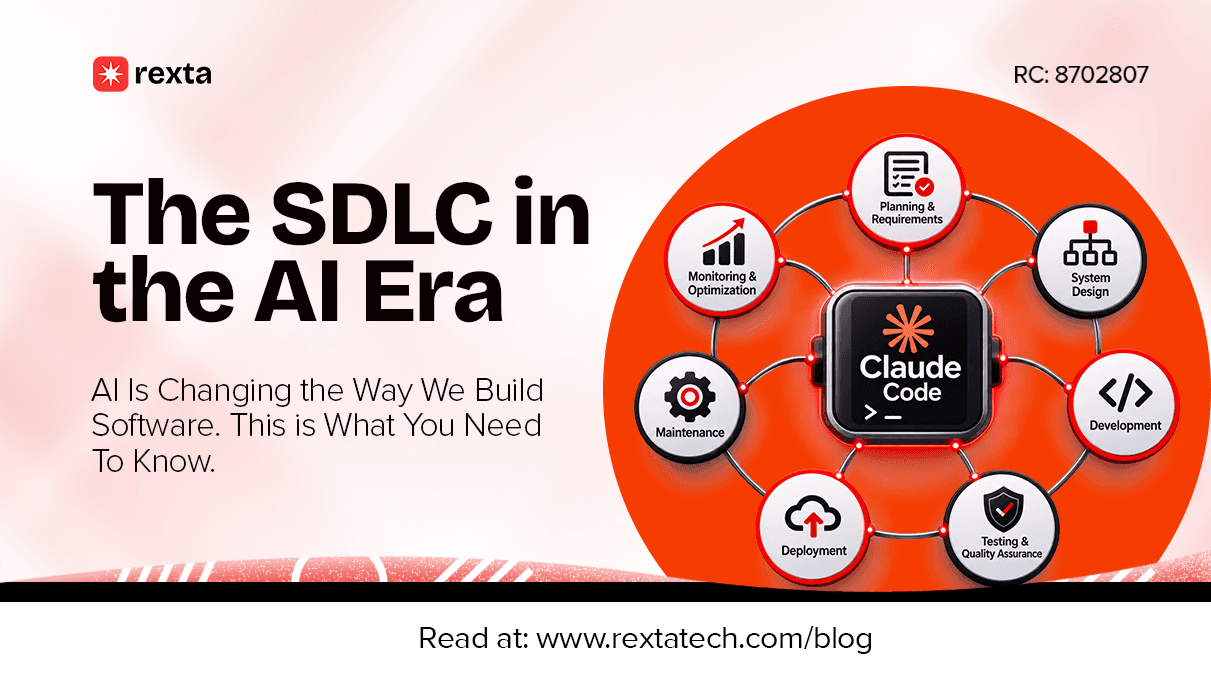
The SDLC in the AI Era: How AI Is Changing the Way We Build Software
Explore how AI is changing software planning, design, coding, testing, deployment, and maintenance, and what developers and businesses need to understand.
13 Nov 2026

7 Books to Read as a Business Owner Before You Launch
Explore seven useful business books covering customer research, innovation, sales, leadership, and the practical lessons every aspiring entrepreneur should know before launching.
11 Nov 2026

Business 101: 7 Things You Need to Understand Before Starting a Business
Discover seven business fundamentals covering brand identity, customer research, financial management, marketing, and the systems needed to build a business that can grow.
6 Nov 2026